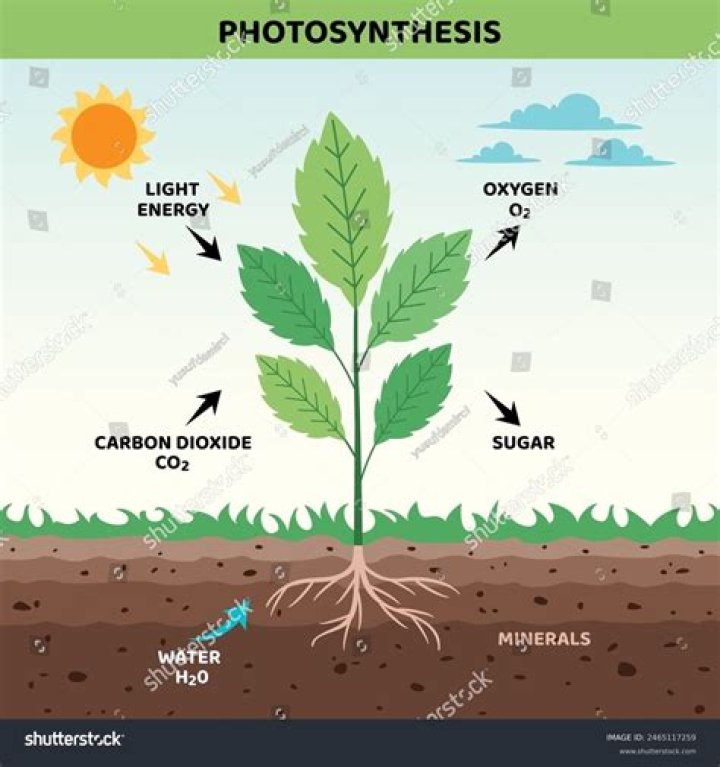
Plants kept in dark places can hardly access any sunlight. As you know by now, plants use sunlight to make their own food. When the plant is in a dark room, it cannot photosynthesize and has not enough food left for the leaves to be healthy. Eventually, the plant dries up and dies due to a lack of sunlight.
Can plants survive in the dark?
Plants cannot survive in total darkness. All plants, with the exception of a few that live on other organisms, use a process called photosynthesis to obtain the energy they need. The vast majority of plants are autotrophs—they are self-feeding and require sunlight to survive.
What happens to a plant kept in darkness for 24 hours?
The plant will die within a few hours as it cannot produce food without sunlight. The plant will become dormant, producing neither oxygen nor carbon dioxide. The plant will use its stored food to obtain energy and survive.
What happens to plants without sunlight?
Plants deprived of light will lose their color and die. The shoots exposed to “limited/no” sunlight had a yellow/white color due to the fact that photosynthesis could not occur. The lack of sunlight stunted photosynthesis and therefore the sprouts were not able to produce the chlorophyll needed to create a green color.
How long can a plant survive in the dark?
The length of time a plant can survive without light can be between 4 to 20 days depending on the amount of light the plant is normally subjected to. Low-light plants can go from 12 to 20 days, whereas light-loving plants can merely last between 4 to 10 days before they die.
25 related questions foundWhat happens to plants at night?
Plants release oxygen during the day in the presence of natural light through the process of photosynthesis. While at night, the plants uptake oxygen and release carbon dioxide, which is called respiration.
Do plants need complete darkness at night?
Plants, shrubs and trees use sunlight for photosynthesis during the daytime, but at night they need darkness to regenerate a key compound - phytochrome. Nighttime lighting can reduce vegetation's ability to properly create this compound.
Why does plants do not grow in a dark place?
Plants need light -- they can't survive without it. Light is a very important part of photosynthesis, the process plants use to convert carbon dioxide and water into food. Without light, photosynthesis can't work properly, and without photosynthesis, plants don't get all the food they need to grow healthy and strong.
Do plants need the dark?
Plants do need that period of darkness for their metabolism to work properly. They are not designed to create food non-stop, and it will do them harm in the long term to put them in this sort of situation. So, yes, plants need their darkness just as much as they need their light.
What will happen if the green plant is kept in dark?
EXPLANATION: If a green plant is kept in complete darkness for 3 to 4 days then it will eventually die. This happens because for process of photosynthesis sunlight is required and it is only in the presence of sunlight that the plant can make food for itself.
Do any plants glow in the dark?
Using four genes that make a fungus glow-in-the-dark, a team of international scientists has engineered tobacco plants that emit green light, sparking whimsical imaginings for our future. The research harnesses the ability for the mushroom Neonothopanus nambi to light up the night in its native Brazillian forests.
Can a plant grow without sunlight?
Most plants can grow without sunlight, but all plants require light to undergo photosynthesis. Without natural sunlight, artificial grow lights can provide the specific light wavelengths that plants need to grow. Common low-light plants include: dracaena, snake plant, spider plant, & some ferns.
Why do plants grow faster in the dark?
The main reason for plants growing taller in the dark is that they are using up the extra energy that they've stored up throughout the day and will not require light until this has depleted.
What are the differences between plants grown in darkness and those grown in light?
The seeds in the dark-grown condition rely upon the stored chemical energy within their cells (lipids, proteins, carbohydrates) to power their growth. The seeds in the light-grown condition only partially rely upon their stored chemical energy and start to harness solar energy as their chloroplasts develop.
Do plants grow during the day or night?
The answer to the essential question of this article is–Yes, plants do grow at night. Because during the daytime, they consume sunlight for photosynthesis. Hence plants continue to grow in the dark, similarly, as they grow in sunlight, as they perform on circadian cycles (24-hour biological cycle).
What is the purpose of putting the plant in darkness for two days?
We should keep a potted plant in a dark room for 2 to 3 days before conducting an experiment on photosynthesis because: The presence of starch demonstrates photosynthesis. As a result, the plant should be put in a dark room for 24-48 hours before initiating a photosynthesis experiment to destarch leaves.
What happens if you leave grow lights on 24 hours a day?
Too much light in various growth phases can interrupt a weed plant's natural process of growth and dormancy. Worse, light exposure for a whole day can damage and kill your plants.
Can plants get too much LED light?
Myth #14: LED Lights Can't Damage Plants
The reality is that modern LED grow lights can produce a very high level of light and it can cause photo-bleaching and burn leaves. This depends very much on the plant, but a PPFD of 800 is enough to damage some plants.
Do plants feel pain?
Given that plants do not have pain receptors, nerves, or a brain, they do not feel pain as we members of the animal kingdom understand it. Uprooting a carrot or trimming a hedge is not a form of botanical torture, and you can bite into that apple without worry.
What happens to photosynthesis in the dark?
Plants and some single-celled organisms use photosynthesis to transform water and carbon dioxide into glucose. Light is essential to this energy-generating process. When darkness falls, photosynthesis stops.
Do plants go dormant at night?
So, do plants sleep? I posed the question to several plant experts and the short answer is no, at least not in the literal sense. Plants don't have central nervous systems that seem to be key in what we think of as sleep in humans.
How does sunlight affect plant growth?
Sunlight provides the energy plants need to convert carbon dioxide and water into carbohydrates and oxygen. The carbohydrates produced by photosynthesis are used for vegetative and reproductive growth and to increase crop biomass. Because solar energy is needed for photosynthesis, it only occurs during daylight.
Do plants continue to grow at night?
Do Plants Grow At Night? Yes! The absence of light actually stimulates plants to grow fastest at night. Plant phytochromes detect darkness, encouraging growth hormone production, causing the plant to elongate in search of light.
Why do seeds grow better in the dark?
1073. Seeds will not germinate so well in light as in darkness ; because light decomposes the carbonic acid gas, expels the oxygen, and fixes the carbon; thus hardening all the parts of the seed, and preventing vegetation.
Can plants survive with only grow lights?
Sunlight is the perfect balance of wavelengths necessary for plant growth and blooming, but you can also use artificial light to help your plants along. In fact, low-light foliage plants (such as pothos and peace lily) can grow quite nicely in windowless offices with enough artificial light.