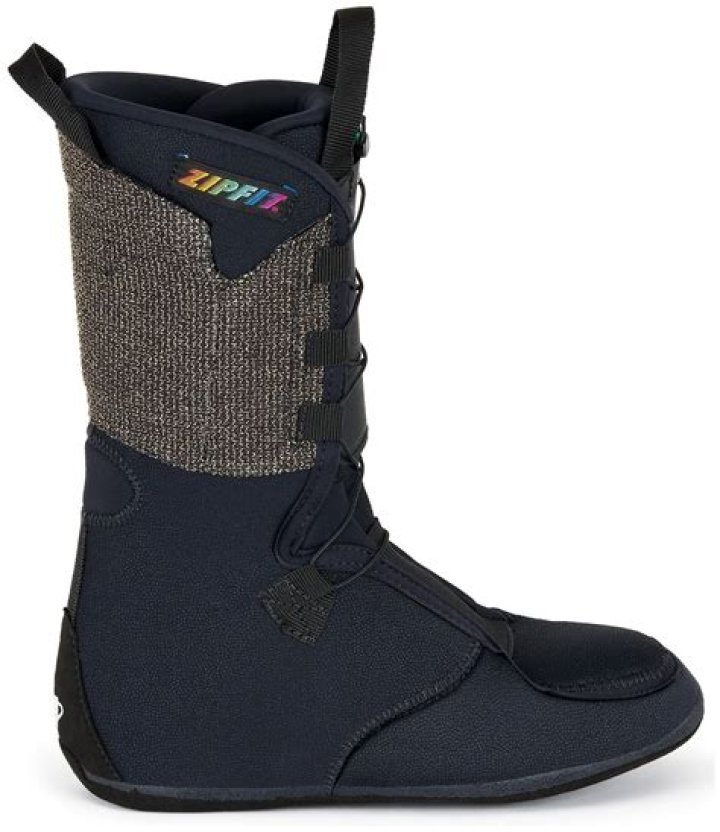
The main difference in backcountry touring boots is that they are designed for both uphill and downhill travel.
Can touring boots work in downhill bindings?
Touring boots will fit into most alpine bindings. In Chamonix this is what most local people do when they are not touring. Some touring boots fit into all alpine bindings because they obey the Alpine DIN norm, the Touring boot DIN norm is only loosely followed anyway.
Can you use ski touring boots with regular bindings?
Frame Bindings
Almost all frame touring bindings are compatible with touring boots. Exceptions are touring boots with stubby toes (TLT7, Atomic Backland, etc.).
What does touring mean on ski boots?
Touring Ski Boots
Touring boots are all about saving weight and are made of lightweight plastics, buckles and liners. The lighter the boots the more you compromise the performance. They have a 'walk mode' in the spine of the boot which allows the cuff to be released for walking, giving a large range of motion.
Can you use touring skis for downhill?
Absolutely! In the last few years a lot has happened and our touring skis work very well on the slopes. Although you should adjust your speed in icy conditions, our touring skis basically react similar to alpine skis. This means that you don't have to adapt off-piste and you can simply keep your usual riding technique.
27 related questions foundDo I need touring boots?
You do need specialized boots for ski touring typically. There are touring bindings which allow you to use alpine ski boots. However, there are numerous disadvantages that alpine boots have compared to touring boots. These disadvantages range from “discomfort” to disqualifying them for use in many situations.
What are touring skis used for?
Known by terms such as Ski Touring, Alpine Touring, Ski Mountaineering, or Radonnée, these all involve the ability to climb uphill or traverse on skis or a split snowboard, then transition to downhill mode and ski or snowboard back down, even for multiple laps.
ARE AT bindings good for downhill?
Read more about us. As you transition from resort skiing to the backcountry, your set-up inevitably will become more complex. Some AT bindings prioritize downhill performance, particularly for aggressive skiers, while others focus on efficient uphill travel by keeping weight low and a natural stride in tour mode.
Are touring boots more comfortable?
Unlike many downhill ski boots, backcountry ski boots have two modes: one for touring and one for downhill. They have a tour/walk mode that allows a wider range of motion and a more comfortable forward stride than traditional downhill ski boots.
Are touring bindings safe?
Frame Touring Bindings
They'll be a bit less than ideal, but they're safe, reliable, and easy to use, and any day skiing is better than no day of skiing, which makes frame bindings the right choice for a lot of people.
Can you put touring bindings on any ski?
Touring Bindings
When you reach the top of your climb, you can clamp the heel piece back onto the ski for your descent and ski downhill as you would on a pair of traditional downhill bindings. AT bindings can be affixed to any alpine skis though, generally, the lighter the ski, the better.
Do I need special boots for alpine touring bindings?
Frame Versus Tech Bindings
Tech bindings have two separate pieces—one at the toe and one at the heel—and, for the most part, two toe pins that grab your boot on either side. You need boots specifically made for tech bindings, or boots with tech inserts, to use these.
Should touring boots be tight?
We are looking for 1-2 fingers of space in between your heel and the shell. Those that prefer a more alpine style fit will want closer to 1 finger of space. This tightness provides a boost in responsiveness on the downhill, but will also limit circulation and cause colder feet. A 2 finger fit is a relaxed fit.
How do you break in touring boots?
BREAKING IN
Once you've fit your touring boot as best you can, it's time to break it in. Allow ample time to troubleshoot on short tours before you head out for a big day. Try different socks, different pitches and different style skin tracks. It might take a couple trips back to the shop to pinpoint repeat hot spots.
Why do my ski boots hurt my ankles?
Ski boots that are too soft or too stiff for your ankle strength and skill cause dysfunctional ankle movement, resulting in pain. If your ski boots don't fit correctly, your foot may literally bounce around inside your boot, referred to as ankle and heel slop.
Can you downhill ski with cross country skis?
Skiing downhill on cross country skis is challenging. New skiers are intimidated and concerned. Even experienced skiers may struggle to ski the downhills to the best of their ability.
How difficult is ski touring?
Certainly, ski touring can be hard work, with a lot of effort needed on the uphill sections. However, the effort is well worth it: the thrill of making first tracks on a long descent, well away from the rest of the ski world with the wild splendour of the winter mountains all around.
Can you use touring skis on groomed trails?
Touring. Touring skis can be used on groomed or ungroomed trails. They are also known as “backcountry” skis because of how rugged they can be. Generally, these skis are longer, light in weight, and a little bit thicker in width to provide more stability to skiers who decide to take on ungroomed trails.
Can you alpine ski in touring boots?
Your boots will need hike/ski modes and tech binding compatibility in order to go backcountry skiing. Choosing and fitting a good pair of boots is one of the most important steps in getting a proper backcountry touring set up, so take your time and make sure that your boots will work with your binding set up!
How long do touring bindings last?
How long does a DYNAFIT Pin Binding normally last? Greta: Fundamentally, our bindings were developed to have a lifespan of 10 years. This is also the length of the lifetime warranty we have offered since 2019, which covers all defects in materials and workmanship.
How ski bindings work touring?
The tour mode works by simply rotating the heel so the pins are no longer facing the boot, meaning the heel wont be held by the binding and you are free to walk. To change the heel from ski to tour you first push down the brake, then turn the heel 90degrees clockwise.
What are the types of touring bindings?
There are two main types of ski touring binding — Frame and Tech.